
The 10 essential features every Zambian business website needs are not optional extras – they are the baseline your competitors are already building toward. If your business still relies solely on a WhatsApp status or a Facebook page, you are missing the customers who search Google at 9 PM looking for exactly what you sell.
Zambia’s digital economy is accelerating fast. According to the Zambia Information and Communications Technology Authority (ZICTA), mobile phone subscriptions jumped 9.5% from 21.1 million in 2023 to 23.2 million in 2024, while internet subscriptions climbed 7% to reach 13.5 million in the same period. E-commerce revenue hit US$134 million (roughly ZMW 3.5 billion) in 2025 and is still growing. The window to build a credible, professional website in Zambia before your sector becomes crowded is open right now – but it will not stay open forever.
This guide walks through every feature you need, with specific examples drawn from retail, professional services, tourism, healthcare, and education businesses across Zambia. By the end, you will know exactly what to ask your web developer – or how to build it yourself.
1. Mobile-First Design

Most Zambians browsing the internet are doing so on a smartphone, not a desktop. When ZICTA reported 23.2 million mobile subscriptions against a population of around 21 million, that tells you one thing: multiple SIM cards, near-constant mobile use. If your website loads slowly or looks broken on a small screen, those visitors leave within three seconds and never come back.
Mobile-first design means your developer builds the phone version of your site first, then scales up to desktop – not the other way around. Text must be large enough to read without zooming. Buttons must be big enough to tap with a thumb. Forms must not require a keyboard that covers the screen.
A clothing boutique in Lusaka’s Arcades Shopping Centre reported a 40% increase in enquiry messages after switching from a desktop-only website to a mobile-responsive one. Their previous site was technically live, but customers on Airtel data were abandoning it before the homepage even loaded. A mobile-responsive website is the single most important technical decision you will make.
2. Fast Loading Speed
Page speed is not just a technical metric – it is revenue. Google research consistently shows that a one-second delay in load time can reduce conversions by 7%. On slower Zambian data connections, that penalty is even steeper.
The most common causes of slow websites in Zambia are oversized images, cheap shared hosting on servers based in Europe or the US, and bloated website themes. A tour operator in Livingstone found that compressing their gallery images from 4 MB each to under 200 KB cut their average page load time from 11 seconds to under 3 seconds – and their enquiry form submissions doubled in the following month.
Practical steps to improve speed include: using a caching plugin (LiteSpeed Cache on WordPress works well), hosting with a provider that has servers closer to Africa, and running your site through Google PageSpeed Insights regularly. Aim for a score above 70 on mobile. Scoring above 90 puts you ahead of most competitors in the Zambian market.
3. Local Mobile Money Integration
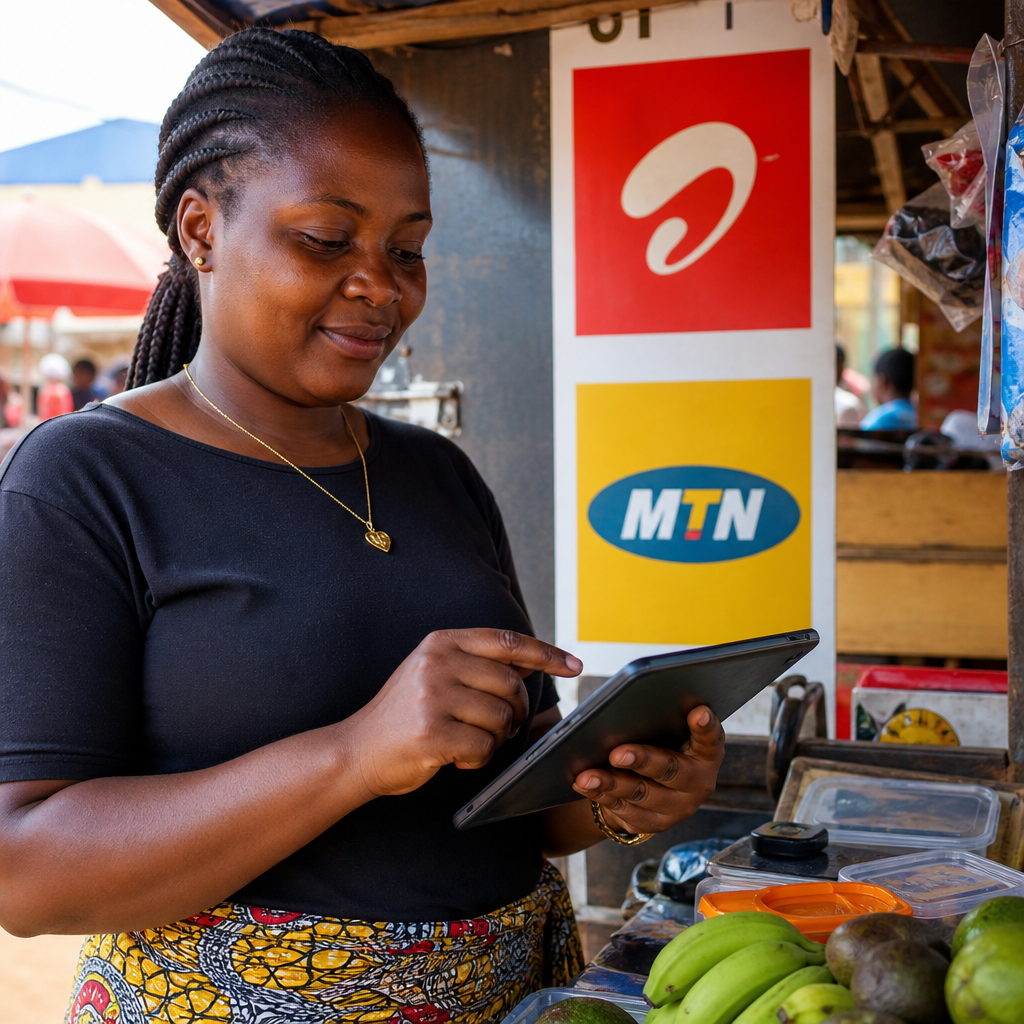
This is the feature most Zambian business websites are missing – and it is the one that costs them the most money. Customers in Zambia do not always carry bank cards. They carry phones loaded with Airtel Money, MTN Mobile Money, or Zamtel Kwacha. If your website cannot accept these payments, you are handing sales to competitors who can.
Here is how each option works for small businesses:
- Airtel Money Merchant: Register at any Airtel service centre or through the Airtel Business portal. Once approved, you receive a merchant till number. Your developer can integrate the Airtel Money API so customers pay directly from the website checkout. Setup costs are minimal and Airtel waives transaction fees on many merchant plans.
- MTN Mobile Money (MoMo) Merchant: Apply through MTN Zambia’s business services. MTN MoMo offers a merchant API and a payment gateway plugin compatible with WooCommerce and other platforms. Transaction fees sit around 1-1.5% per transaction as of 2025.
- Zamtel Kwacha: Zamtel’s mobile money product serves customers on the Zamtel network. Merchant registration is available at Zamtel shops. Market share is smaller than Airtel and MTN, but including it signals to customers that you have considered every payment option.
If you use WordPress with WooCommerce, plugins like DPO Pay (formerly 3G Direct Pay) and Peach Payments support multiple African mobile money networks including those operating in Zambia. DPO Pay charges around 3.5% per transaction with no monthly fee. A school in Choma accepting term fees online through MTN MoMo removed the need for parents to queue at the office – fee collection improved by 30% in the first term.
Always display prices in Zambian Kwacha (ZMW) first, with USD in brackets if you serve international clients. Seeing ZMW immediately reduces the hesitation that comes from mental currency conversion.
4. Clear Navigation and Site Structure
Navigation is how visitors find what they came for. If they cannot find it within two clicks, they leave. A professional website in Zambia – whether for a law firm in Cairo Road, a clinic in Ndola, or a lodge near South Luangwa – should have a navigation menu that fits on one line and uses plain language.
Good navigation labels for a Zambian SMB might be: Home, Services (or Products), About Us, Contact. A healthcare provider could add Patient Resources. A school could add Admissions and Fee Schedule. The rule is simple: use the words your customers already use, not the internal jargon your staff uses.
Dropdown menus can organise sub-pages without cluttering the main bar. But keep dropdowns to one level deep on mobile. Nested menus inside nested menus are impossible to use on a touchscreen. Test your navigation by asking someone who has never seen your site to find your phone number. If they take more than 15 seconds, redesign.
5. WhatsApp Business Contact Integration

WhatsApp is where Zambian business conversations happen. A direct WhatsApp button on your website removes every barrier between a curious visitor and a paying customer. Use a WhatsApp Business account – not a personal number – for three important reasons: it separates your business communications from personal messages, it lets you set up automated replies, and it allows a catalog of your products or services.
Set up an auto-reply message for off-hours. Something like: “Thank you for contacting Mwila Electrical Services. Our office is open Monday to Saturday, 8 AM to 5 PM. We will respond to your message first thing in the morning.” This single step prevents customers from assuming you ignored them and turning to a competitor overnight.
Add a floating WhatsApp button on every page of your site using a plugin like WP Social Chat (free on WordPress) or a simple HTML/CSS snippet. For a retail pharmacy in Kitwe, this change resulted in 60 new customer enquiries in the first two weeks – most from people who had visited the site before but found no easy way to ask a question.
The WhatsApp Business API is available for larger businesses needing to connect WhatsApp to a CRM or handle high message volumes. For most Zambian SMBs, the free WhatsApp Business app is sufficient to start.
6. Enquiry Forms and Lead Capture
Not every visitor is ready to call. Some people browse at midnight, compare options over a few days, and only reach out when they have made a decision. An enquiry form captures those leads at the moment of intent, even when you are asleep.
Keep forms short. A contact form with Name, Phone Number, and Message fields converts better than one asking for 10 pieces of information. A legal firm in Lusaka reduced its form from 8 fields to 4 and saw form submissions increase by 55% in one month. People fill out short forms. They abandon long ones.
For education and healthcare businesses, add a specific form for each service. A private school in Lusaka might have a separate “Book a School Tour” form distinct from the general enquiry form. This tells the team immediately what type of lead has arrived. Connect your forms to your email using a service like Formspree or the built-in WPForms integration, and set up an instant email notification so you never miss a lead.
7. Local Contact Information and Google Business Profile
Your full local contact details – physical address, phone number, WhatsApp number, email, and operating hours – should appear on every page of your website, typically in the footer. This is basic trust-building. A customer looking for a dentist in Livingstone needs to know you are actually located in Livingstone, not Lusaka. A visitor booking a safari lodge wants to see a physical address they can verify on Google Maps.
Beyond the website, claim and complete your Google Business Profile. This is the listing that appears when someone searches “plumber near me” or “accountant in Ndola” on Google. It is free and takes about 30 minutes to set up properly. Visit Google Business Profile to create or claim your listing. Add your address, phone, hours, photos, and a link to your website. Ask satisfied customers to leave Google reviews – each five-star review improves your local search ranking.
Businesses that complete their Google Business Profile fully receive, on average, 7 times more clicks than those with incomplete listings, according to Google’s own platform data. A tour guide company operating out of Livingstone who added 20 photos and collected 15 reviews within three months saw their booking enquiries from Google Search double.
8. SSL Security Certificate
SSL (Secure Sockets Layer) is the technology that puts the padlock icon in your browser’s address bar and changes your URL from “http://” to “https://”. Without it, modern browsers like Chrome and Safari display a “Not Secure” warning to every visitor. For a professional website in Zambia trying to build customer trust, that warning is damaging.
SSL certificates encrypt the data exchanged between your visitor’s browser and your server. This matters especially if you have contact forms, payment pages, or a login area. Google also uses HTTPS as a ranking signal, meaning a secure site has a small but real advantage in search results over an unsecured competitor.
Most reputable hosting providers include a free SSL certificate through Let’s Encrypt. If you host with a Zambian or African provider, confirm SSL is included before signing up. Providers like Zamhost (based in Zambia, plans from approximately ZMW 150-300/month) and Afrihost (pan-African, hosting from around ZMW 200/month for shared plans) both offer SSL inclusion with their standard packages. Activating SSL is usually a one-click process inside your hosting control panel. There is no reason to run a business website in 2025 without it.
9. SEO Foundations and Analytics
Search Engine Optimisation (SEO) is how customers find your website on Google without you paying for every click. For a small business website in Zambia, the basics of SEO cost nothing but time – and they compound over months and years into a steady stream of free traffic.
The non-negotiable SEO foundations are:
- Page titles and meta descriptions: Every page on your site needs a unique title that includes the service and location – for example, “General Practice Doctor – Lusaka, Zambia | Family Health Clinic”. Meta descriptions (the summary text that appears under your link on Google) should be 150-155 characters and clearly describe what the page offers.
- Heading structure: Use one H1 heading per page with your main keyword. Use H2 headings for major sections. This helps Google understand what each page is about.
- Image alt text: Every image should have a descriptive label. A photo of your Livingstone safari camp should have alt text like “tented safari camp on the Zambezi River, Livingstone Zambia” – not “image001.jpg”.
- Google Search Console: Connect your site to Google Search Console (free) to see which search queries bring visitors to your site and to flag any technical errors Google finds while crawling.
- Google Analytics 4: Install Google Analytics to track how many people visit, which pages they read, and where they come from. This data tells you which products or services attract the most interest online, so you can invest in those areas.
A Lusaka accounting firm that added location-specific pages for services like “tax return filing Lusaka” and “company registration Zambia” moved from page 4 to page 1 of Google within five months, purely through on-page SEO improvements. No paid advertising was involved. A well-structured SEO strategy for your small business website delivers results that paid ads cannot replicate at scale.
10. Easy Content Management System (CMS)
A business website that you cannot update yourself is a liability. If you need to call a developer every time you want to change your opening hours, add a new service, or post a news update, you will either pay constantly or let the site go stale. Stale websites lose Google rankings and customer trust alike.
WordPress powers around 43% of all websites globally and is the most practical choice for most Zambian SMBs. It is free, well-supported, and has thousands of plugins that handle everything from online booking (for tourism and healthcare businesses) to school fee payments. The admin dashboard is visual enough for a non-technical owner to update content without touching code.
Alternatives worth considering:
- Wix: Fully drag-and-drop, hosted and managed, from around US$17/month (ZMW 450). Ideal for retail businesses that want a polished look without technical complexity.
- Shopify: Best for e-commerce-first businesses. Starts at US$29/month (ZMW 770). Includes mobile money and card payment integrations via third-party apps.
- Squarespace: Strong for visual industries like tourism and hospitality. From US$16/month (ZMW 425).
For locally-hosted WordPress sites, Zamhost’s shared hosting plan (approximately ZMW 180/month) provides a reliable starting point. Afrihost offers WordPress-optimised hosting from around ZMW 200/month with automatic backups included. Choose a provider with a support team accessible by phone or WhatsApp during Zambian business hours – international providers with US-based support teams can leave you waiting overnight when something breaks.
Whatever platform you choose, ensure non-technical staff can update it. Run a test: can your receptionist change the office hours on the Contact page without help? If the answer is no, choose a simpler platform or invest in a 30-minute training session with your developer.
Key Takeaways
- Mobile-first design is non-negotiable when 23.2 million Zambians access the internet primarily via smartphone.
- Mobile money integration – Airtel Money, MTN MoMo, and Zamtel Kwacha – is the most commonly missing feature on Zambian business websites and the one with the highest immediate revenue impact.
- Display prices in ZMW first. Customers should not have to do currency conversion to understand what you charge.
- Use WhatsApp Business, not a personal number. Set up auto-replies for off-hours to stop leads going cold overnight.
- SSL, fast loading, and clear navigation are the technical minimum for a professional website in Zambia in 2025.
- Claim your Google Business Profile and complete every field. It is free and drives real local search traffic.
- Choose a CMS like WordPress that your team can update without calling a developer every time.
- Connect Google Analytics and Search Console from day one. Data you collect now becomes strategy in six months.
Conclusion
Building a strong online presence does not require a huge budget or a big team. The 10 essential features every Zambian business website needs are all achievable by small businesses – whether you run a retail shop in Lusaka, a clinic in Ndola, a lodge in Livingstone, a school in Choma, or a professional services firm anywhere in Zambia. The businesses that put these foundations in place now will be the ones that dominate local Google search results as Zambia’s internet user base continues growing.
Start with what matters most to your customers. If you sell products, prioritise mobile money integration and fast loading. If you provide services, prioritise your enquiry form, WhatsApp Business contact, and Google Business Profile. Then build from there, adding analytics, SEO optimisations, and content management capability over time.
If you are ready to take the next step, explore our resources on professional website design services and see how a properly built site can change the trajectory of your business. You can also read our guide to understanding website development costs for small businesses so you know exactly what to budget before you approach a developer.
Your customers are already online. The question is whether they can find you.
FAQ
How much does it cost to build a business website in Zambia?
A basic professional website in Zambia typically costs between ZMW 5,000 and ZMW 20,000 (roughly US$200-US$800) for a freelance developer, plus ZMW 150-300 per month for hosting. Platforms like Wix or Squarespace offer DIY options from around ZMW 425-450 per month. Your budget should reflect the complexity of features you need, including mobile money integration.
Which mobile money payment options should a Zambian business website accept?
A Zambian business website should accept Airtel Money, MTN Mobile Money (MoMo), and Zamtel Kwacha to serve the widest possible customer base. Register as a merchant with each network to receive a till number and API access. Payment gateway providers like DPO Pay can consolidate all three networks into a single integration on platforms like WooCommerce or Shopify.
Do I need a website if my Zambian business already has a Facebook or WhatsApp presence?
Yes. Social media platforms control who sees your content through their algorithms, and your presence can be removed at any time. A website gives you a permanent, professional address that you own. It also appears in Google search results, which social profiles rarely do effectively. Most successful Zambian businesses use both – social media to engage, and a website to convert visitors into customers.
What is the best website platform for a small business in Zambia?
WordPress is the most widely recommended platform for Zambian SMBs because it is free, flexible, and supported by local developers. For e-commerce businesses, Shopify offers strong mobile money integration through third-party apps. Wix is a strong option for business owners who want to manage updates themselves without technical training. Choose based on your team's comfort level and the features your customers need most.
How does SSL security affect my Zambian business website?
SSL security adds the padlock icon to your website address and changes it from http:// to https://. Without it, browsers like Chrome warn visitors that your site is 'Not Secure,' which damages trust and reduces enquiries. SSL also improves your Google ranking slightly. Most Zambian and African hosting providers like Zamhost and Afrihost include a free SSL certificate with their standard hosting plans.
How long does it take for a Zambian business website to appear on Google?
A new website typically takes 4-12 weeks to start appearing in Google search results. You can speed this up by submitting your sitemap to Google Search Console, completing your Google Business Profile, and ensuring your site has clear page titles and descriptions targeting local keywords like your service and city. Consistent, relevant content updates help Google index and rank your pages faster.