
If you have ever sat across from a Lusaka-based tech agency and walked out more confused than when you walked in, you are not alone. The question of website design vs website development trips up almost every business owner who is new to building an online presence. Someone quotes you a “design fee,” another quotes you a “development fee,” and a third bundles them together under “a website project” — and none of them explains the difference clearly.
This guide will change that. By the end, you will know exactly what each discipline covers, which one you actually need right now, and roughly how much it costs in Zambia. Think of this as a conversation over coffee with someone who has no incentive to upsell you.
The Simple One-Sentence Explanation
Web design is about how a website looks and feels. Web development is about how it works. Both matter — but they require different skills, different tools, and often different people.
A designer decides that your “Contact Us” button should be green, placed above the fold, and surrounded by white space so it draws the eye. A developer writes the code that makes the button actually send the form data to your email inbox. Without the designer, the button is ugly and easy to miss. Without the developer, it just sits there doing nothing when someone clicks it.
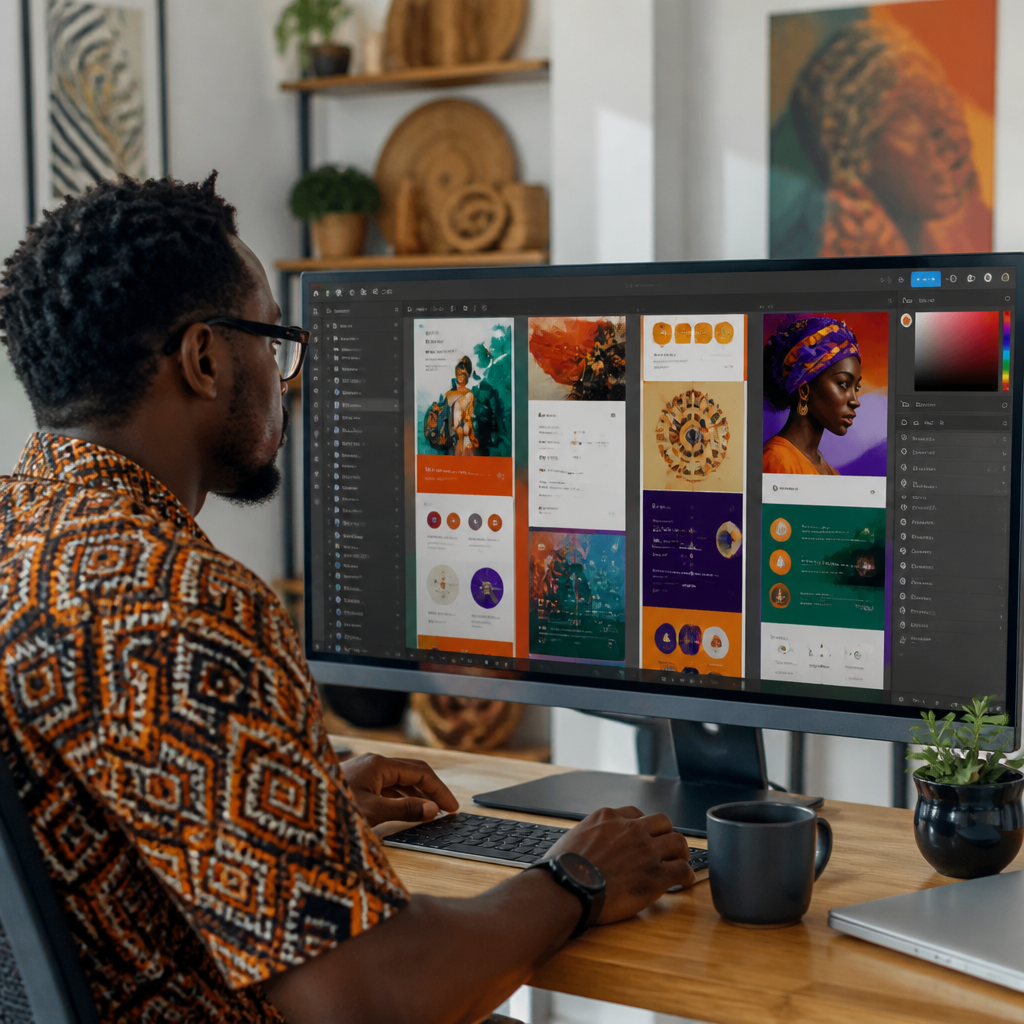
What Is Website Design? (The Look and Feel Layer)
Website design covers everything a visitor sees and interacts with visually. It breaks into two overlapping areas: User Interface (UI) design and User Experience (UX) design.
UI design is the visual layer — colours, fonts, button shapes, icons, spacing, and layout. UX design is the structural layer — how pages connect, how many steps a checkout takes, whether a menu is logical, and whether a visitor can find what they need in under three seconds. Both are design work, not coding work.
What a Web Designer Actually Delivers
- Wireframes and mockups (visual blueprints before any code is written)
- Brand-consistent colour palettes and typography choices
- Mobile-responsive layouts (how the site rearranges itself on a phone screen)
- Navigation structure and information architecture
- Prototype user flows showing how a customer moves from the home page to a purchase
Tools a designer typically uses include Figma, Adobe XD, and Canva for mockups. They hand the finished design file to a developer — or, in simpler projects, use a drag-and-drop builder like Wix or Carrd to bring the design to life themselves without writing code.
Here is why this matters for your bottom line. Research consistently shows that 94% of a website’s first impressions are design-related, and 75% of consumers judge a company’s credibility based on its website design (as cited by multiple conversion-rate studies through 2025). For a Zambian company where word-of-mouth still drives most referrals, your website is often the first place a stranger checks before deciding whether to trust you. A poorly designed site does not just look bad — it actively costs you business.
What Is Website Development? (The Engine Under the Hood)
Website development is the process of writing code that makes a website function. It splits into two major areas: front-end development and back-end development.
Front-End Development
Front-end development translates a designer’s visual mockup into actual browser code using HTML, CSS, and JavaScript. If a designer drew a beautiful product gallery in Figma, the front-end developer is the person who turns that drawing into real, clickable web pages. Front-end developers also handle animations, form validation (telling a user “please enter a valid email”), and making sure pages load correctly across Chrome, Firefox, and Safari.
Back-End Development
Back-end development handles everything that happens on the server — the part a visitor never sees. When a customer places an order on your Zambian e-commerce store, back-end code processes the payment, updates your inventory, sends a confirmation email, and records the transaction in a database. Back-end developers work with languages like PHP, Python, or Node.js and platforms like WordPress (which powers around 43% of all websites globally as of 2025), WooCommerce, and custom-built systems.
Ongoing Maintenance
This is the category most business owners forget to budget for. Maintenance covers security updates, plugin patches, uptime monitoring, database backups, and fixing bugs that appear after a site goes live. Here is something important to understand: a designer cannot handle security maintenance. Design is a visual discipline. Patching a WordPress vulnerability, updating SSL certificates, or recovering a hacked site requires a developer with server-level access. Ignoring maintenance is one of the most common and costly mistakes Zambian SMBs make after launch.
A one-second delay in page response can result in a 7% decrease in conversions, and 40% of people will abandon a website that takes more than three seconds to load (a finding that has been replicated across multiple performance studies). In Zambia’s mobile-first context — where most visitors arrive on MTN or Airtel data connections rather than fibre — these numbers are arguably even more punishing. A poorly maintained site that accumulates bloated plugins and unoptimised images will slow down fast.
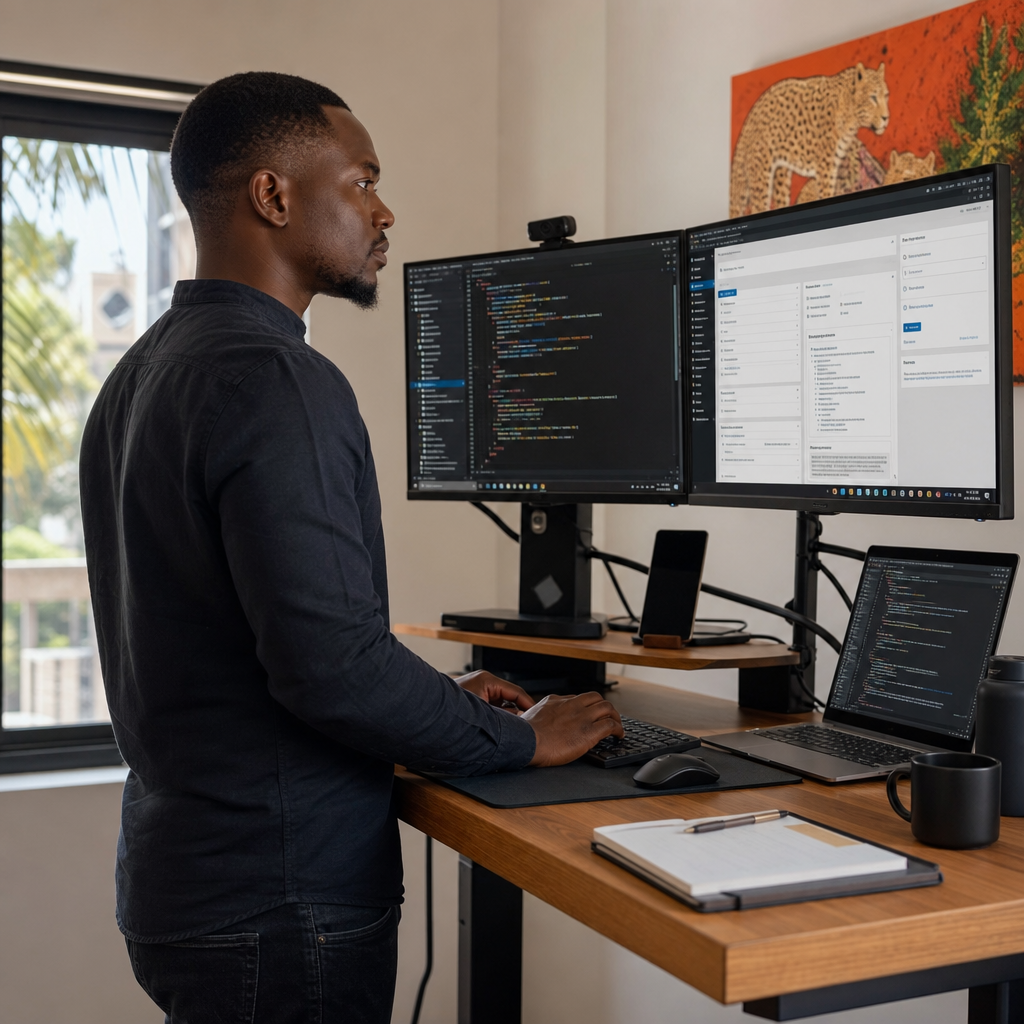
Web Design vs Web Development: A Side-by-Side Comparison
Here is everything you need to know, laid out so you can reference it quickly when talking to a vendor.
- Website Design – Focus: appearance and user experience | Key outputs: mockups, layouts, colour schemes, navigation | Tools: Figma, Adobe XD, Canva, Wix | Skills: visual thinking, UX research, branding | Who does it: web designer or UX designer
- Front-End Development – Focus: turning designs into working browser code | Key outputs: HTML/CSS/JS pages, responsive code | Tools: VS Code, React, Tailwind CSS | Skills: coding, browser compatibility | Who does it: front-end developer
- Back-End Development – Focus: server logic, databases, integrations | Key outputs: APIs, databases, payment gateways | Tools: PHP, Python, MySQL, WordPress | Skills: server management, security, logic | Who does it: back-end developer
- Ongoing Maintenance – Focus: keeping the site secure, fast, and updated | Key outputs: security patches, backups, uptime reports | Tools: ManageWP, WP Engine, cPanel | Skills: server admin, debugging | Who does it: developer or managed hosting provider
When Do You Need Design Only, Development Only, or Both?
This is the question that saves you money. Let’s walk through the most common scenarios for Zambian businesses.
Scenario 1 – You Need Design Only
Your current website exists and functions correctly, but it looks dated or does not reflect your brand. A Lusaka accounting firm I spoke with recently had a site built in 2017 that processed inquiries fine — the contact form worked, the pages loaded — but the layout looked like it belonged in a different era. They needed a designer to refresh the visual identity and improve the mobile layout, not a developer to rebuild the back end.
If you are also starting from scratch with a simple brochure site and plan to use Carrd (best for one-page sites, from $19/year) or Wix (drag-and-drop, good for five-page sites, from $17/month), a skilled designer can often handle both the design and the publishing on those platforms. No separate developer needed.
Scenario 2 – You Need Development Only
Your brand is established, your design is solid, but something is broken or you need a new feature. A Lusaka retailer with a working WordPress site might need a developer to integrate a mobile money (MTN MoMo or Airtel Money) payment gateway, fix a recurring checkout bug, or migrate the site to a faster server. The design does not change — only the code does.
Scenario 3 – You Need Both (A Full Website Project)
You are starting from scratch, rebranding completely, or building something with custom functionality — an e-commerce store, a booking system, a membership portal. In this case, you need a designer and a developer, either as two separate people or from an agency that employs both. Trying to skip the design phase and go straight to development is like asking a builder to construct a house without architectural drawings.
When Do You Need Both? Three Zambian Scenarios
A Lusaka restaurant going online for the first time. They need a designer to create a warm, food-forward visual identity and map out the menu navigation. They need a developer to build an online reservation form that sends booking confirmations to the manager’s WhatsApp. Neither role can fully replace the other here.
A Copperbelt wholesaler launching an e-commerce store. They need a designer to plan the product catalogue layout and checkout flow so it converts mobile shoppers. They need a developer to build the WooCommerce store, connect it to a Zambian payment processor, and set up inventory alerts. This is a full-stack project.
A Livingstone tourism company refreshing their brand. Their existing WordPress site works fine but looks outdated. They hire a designer for new mockups and a front-end developer to implement them — back-end stays untouched. Budget: design plus front-end only, no back-end rebuild needed.
Website Design vs Website Development Cost in Zambia (2025 Estimates)
Pricing varies significantly based on the agency, the freelancer’s experience, and the complexity of the project. The table below gives you a realistic working range for Zambia. Use it as a starting point, not a fixed quote.
- Landing Page (single page, design + build) – ZMW 2,000 to ZMW 6,000 | Typically uses Carrd or a simple WordPress theme | Best for: new businesses testing an idea
- Brochure Site Redesign (3-5 pages, existing site) – ZMW 4,000 to ZMW 12,000 | Replaces visual design on existing WordPress or Wix site | Best for: established businesses updating their look
- E-Commerce Build (design + development + payment integration) – ZMW 15,000 to ZMW 45,000+ | Usually WordPress + WooCommerce with local payment gateway | Best for: retailers, wholesalers, product-based businesses
- Monthly Maintenance (security, updates, backups, uptime) – ZMW 500 to ZMW 2,500/month | Covers plugin updates, security scans, regular backups | Best for: any live site you cannot afford to have go down
Caveat: These are indicative ranges based on market observations as of 2025. Freelancers on the lower end of experience will quote below these ranges; established agencies in Lusaka will often quote above them for complex projects. Always ask for a written scope of work before agreeing to any price.
Choosing the Right Platform for Your Situation
One of the biggest decisions in any website project is which platform to build on. Here are the three most common options for Zambian businesses, with an honest one-line verdict on each.
- WordPress – Powers 43% of the web globally; highly flexible, strong developer community in Zambia, but requires ongoing maintenance and a developer for anything custom. Best for: most small-to-medium businesses that want room to grow.
- Wix – Drag-and-drop simplicity, good for non-technical owners, but limited customisation and harder to migrate away from later. Best for: simple brochure sites where the owner wants to update content themselves.
- Carrd – Extremely affordable and fast for single-page sites; not suitable for e-commerce or multi-page projects. Best for: freelancers, pop-up businesses, or product launch pages.
The UX Investment Argument (Why Good Design Pays for Itself)
If you are tempted to skip proper design to save money, consider this: for every $1 invested in User Experience (UX), businesses report an average return of $100 – a 9,900% ROI, according to research compiled by UX industry analysts through 2025. That is a global figure, but the principle applies directly in Zambia. A tourism company in Livingstone that invests in a clean, fast, mobile-optimised site will convert more WhatsApp inquiries into actual bookings than one with a cluttered, slow site.
Good UX is not decoration. It is the difference between a visitor staying to read your services page and a visitor hitting the back button in four seconds. You can learn more about how user experience design affects conversion rates on this site.
How to Brief a Designer or Developer in Zambia
Once you know which type of professional you need, you want to get a useful quote quickly. Here is what to prepare before your first conversation.
For a Designer
- Three websites you admire (with links) and one sentence on why you like each
- Your brand colours and logo files (if they exist)
- The number of pages you need and the purpose of each
- Your target audience (age, location, what they are looking for)
For a Developer
- The platform you want to build on (WordPress, WooCommerce, custom)
- Any integrations you need (payment gateways, booking systems, WhatsApp chat)
- Whether you already have a design file or need them to work from scratch
- Your expected monthly traffic and whether you need local hosting in Zambia
If you are working with a full-service agency that handles both website design and development, they will typically walk you through a discovery session that covers all of these points at once.
Red Flags When Hiring in Zambia
Not everyone who calls themselves a web designer or developer in Zambia has the depth of experience they claim. Here are three things to watch for.
- No portfolio of live sites. Ask for URLs to sites they have built that are currently live. Anyone can screenshot a template.
- No mention of maintenance. If a vendor delivers a site and disappears, you are one WordPress update away from a broken site. Ask upfront what happens after launch.
- Vague timelines. A legitimate project should have milestone dates — design approval, development handover, testing, launch. “It’ll be ready soon” is not a project plan.
You might also want to explore how to evaluate and choose the right web developer for your specific business needs before signing any contract.
Key Takeaways
- Website design covers how a site looks and how users move through it. Website development covers how it works, both on the front end (what you see) and the back end (the server logic).
- You need a designer if your site is functional but visually dated or hard to use. You need a developer if your site looks fine but has broken features or needs new integrations.
- Most serious business websites need both, either as separate hires or through an agency that covers the full stack.
- Maintenance is a separate, ongoing cost that requires a developer – not a designer. Budget for it from day one.
- In Zambia, a simple landing page starts around ZMW 2,000. A full e-commerce build can reach ZMW 45,000 or more. Always get a written scope before committing.
- Platform choice matters. WordPress gives you flexibility but needs maintenance. Wix is simpler but less scalable. Carrd is ideal for one-page projects on a tight budget.
Conclusion
The web design vs web development distinction is not just technical vocabulary – it is a practical framework that helps you spend your budget wisely and ask better questions when hiring. A Zambian business that understands the difference will never again pay a designer to fix a security vulnerability, or pay a developer to choose a font.
Start by honestly assessing where your biggest gap is right now. Is your site ugly but functional? Hire a designer. Is it attractive but broken or missing key features? Hire a developer. Are you starting from zero with serious business goals? Budget for both.
If you are still unsure which type of help you need, explore our website development services for Zambian businesses or drop a comment below describing your situation. Getting this decision right from the start will save you time, money, and a lot of frustration down the road.
FAQ
What is the main difference between website design vs website development?
Website design focuses on how a site looks and feels – colours, layouts, navigation, and user experience. Website development focuses on how it works – the code that powers forms, payments, databases, and server logic. Design is visual; development is functional. Most complete websites require both disciplines working together.
Can one person do both web design and web development in Zambia?
Yes, some professionals in Zambia are 'full-stack' and can handle design, front-end coding, and back-end development. However, specialists tend to go deeper in one area. For simple sites on Wix or Carrd, a single designer is often enough. For complex e-commerce or custom builds, a team or agency with separate design and development expertise usually delivers better results.
How much does a website cost in Zambia in 2025?
Costs vary widely. A single landing page runs roughly ZMW 2,000 to ZMW 6,000. A brochure site redesign costs ZMW 4,000 to ZMW 12,000. A full e-commerce build ranges from ZMW 15,000 to ZMW 45,000 or more. Monthly maintenance typically costs ZMW 500 to ZMW 2,500 per month. Always get a written scope of work before agreeing to a price.
Do I need a website designer or developer if I use WordPress?
WordPress is flexible enough to need both. A designer creates or selects the visual theme and plans the user experience. A developer handles custom functionality, plugin integrations, payment gateways, and ongoing security updates. If your WordPress site is simple and uses a standard theme, a single developer familiar with design basics may cover both roles adequately.
Why does website maintenance require a developer and not just a designer?
Maintenance involves security patching, plugin updates, database backups, uptime monitoring, and fixing server-level errors. These are coding and server administration tasks, not visual tasks. A designer works in tools like Figma and Canva. A developer works in cPanel, SSH terminals, and code editors. The skill sets are genuinely different, and mixing them up can leave your site vulnerable.
Which platform should a small business in Zambia use – WordPress, Wix, or Carrd?
It depends on your goals. Carrd suits single-page, low-budget projects. Wix is good for simple brochure sites where you want to update content yourself without coding. WordPress is the best long-term choice for businesses that plan to grow, add e-commerce, or need custom features – but it requires ongoing developer maintenance to stay secure and fast.
When does a Zambian business need both a web designer and a web developer?
You need both when starting from scratch with serious business goals, launching an e-commerce store, building a booking or membership system, or doing a complete rebrand. If you only need a visual refresh on a working site, a designer may be enough. If you only need new features on an attractive site, a developer alone can often handle it.