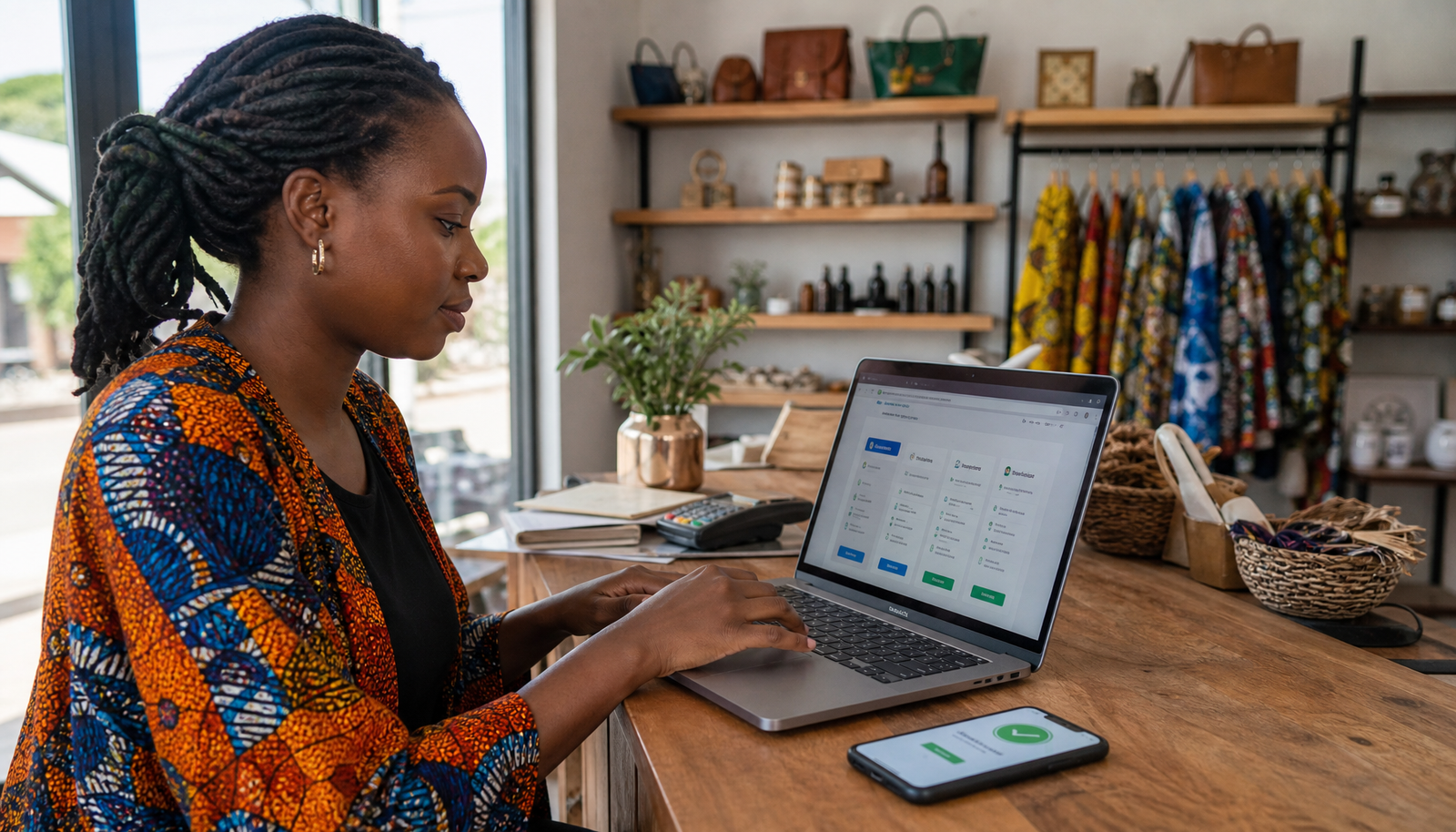
If you run an e-commerce store in Zambia, choosing the right online payment gateway is one of the most consequential decisions you will make. The wrong choice means customers abandon checkout because their preferred payment method is not available. The right one means ZMW lands in your account within days, mobile money users can pay in seconds, and international card holders are not turned away.
This guide reviews the most relevant online payment gateways for Zambia, compares their fees, settlement currencies, Shopify compatibility, and onboarding requirements, and tells you what to check before you sign up. All rate ranges below are sourced from provider websites and public documentation as of mid-2025. Final rates are negotiated and may differ based on business volume and risk profile. Verify current terms directly with each provider before going live.
Why Payment Infrastructure Matters More in Zambia Than in Most Markets
Zambia’s payment landscape looks very different from Europe or North America. Credit and debit card penetration is low. According to the GSMA State of the Industry Report on Mobile Money, mobile money accounts now outnumber traditional bank accounts across Sub-Saharan Africa by a significant margin. In Zambia specifically, data from the Bank of Zambia’s Payment Systems division shows that mobile money is the dominant retail payment channel, with roughly 95% of the adult population holding an active mobile money account compared with a fraction of that holding a credit card.
That statistic has a direct commercial implication: if your checkout does not accept MTN Mobile Money and Airtel Money, you are locking out the majority of Zambian shoppers before they even reach the buy button. A gateway that prioritises card-only processing is built for a different market.
I have seen Shopify stores targeting Zambia lose 60% or more of potential mobile customers simply because the store owner chose a gateway that looked familiar from Western markets. The local mobile money integration is not a nice-to-have in this context. It is the baseline.
Online Payment Gateways in Zambia: Full Comparison Table
The table below summarises the key decision variables for each gateway reviewed in this article. “Shopify compatible” means the gateway can be added as a third-party provider in Shopify settings. Note that Shopify Payments is not available in Zambia, so every Zambian merchant using Shopify must use a third-party gateway. Shopify charges an additional transaction fee of 0.5% to 2% (depending on your Shopify plan) on top of whatever the gateway charges, unless you are on Shopify Plus. Factor this into your cost calculation.
- Pesapal – Card (Visa/Mastercard), MTN Mobile Money, Airtel Money, M-Pesa | Settlement: ZMW, USD | Est. card rate: 2.5-3.5% | Est. mobile money rate: 1-2% | Shopify: Yes (plugin available) | BoZ licensed: Yes
- DPO Group (now Network International) – Card (Visa/Mastercard/Amex), mobile money, bank transfer | Settlement: ZMW, USD, multi-currency | Est. card rate: 2.9-3.9% | Est. mobile money rate: 1-2% | Shopify: Yes (DPO Pay plugin) | BoZ licensed: Yes
- Flutterwave – Card, mobile money, bank transfer, USSD | Settlement: ZMW, USD | Est. card rate: 1.4% local / 3.8% international | Est. mobile money rate: 0.7-1% | Shopify: Yes (official Shopify app) | BoZ licensed: Confirm directly with provider
- Paychangu – Card, MTN Mobile Money, Airtel Money | Settlement: ZMW | Est. card rate: 2.5-3.5% | Est. mobile money rate: 1-1.5% | Shopify: API integration available | BoZ licensed: Confirm directly with provider
- Peach Payments – Card (Visa/Mastercard), mobile money, EFT | Settlement: ZMW, USD, ZAR | Est. card rate: 2.5-3.5% | Est. mobile money rate: 1-2% | Shopify: Yes (official plugin) | BoZ licensed: Confirm directly with provider
- PayPal – Card, PayPal balance | Settlement: USD (conversion required for ZMW) | Est. card rate: 3.49% + fixed fee | Est. mobile money rate: N/A | Shopify: Yes (native) | BoZ licensed: Operates internationally; not a BoZ-licensed PSO
Global disclaimer: All rate estimates above are drawn from publicly available provider pricing pages and partner documentation as of mid-2025. Actual rates are subject to negotiation based on monthly volume, business type, and risk assessment. Always request a formal quote from the provider before committing.
Gateway-by-Gateway Breakdown: Online Payment Gateways Zambia
1. Pesapal
Pesapal is one of the most widely deployed payment processors across East and Southern Africa, and it has strong Zambian market coverage. It supports Visa, Mastercard, MTN Mobile Money, Airtel Money, and M-Pesa in markets where those networks operate. Merchants receive a hosted payment page out of the box, which removes the need for PCI-DSS compliance on your own server. Settlement is available in both ZMW and USD, which is useful if you import stock and want to hold USD reserves.
Estimated card processing fees run between 2.5% and 3.5% per transaction. Mobile money transactions are typically priced at 1% to 2% depending on volume. Pesapal offers a WooCommerce plugin and a Shopify integration, making it one of the more accessible options for store owners who do not have a developer on call. Onboarding requires a business registration certificate, a valid tax identification number, and a bank account in the business name. Processing typically takes 5 to 10 business days.
2. DPO Group (Network International)
DPO Group was acquired by Network International and now operates under that brand in some markets, though the DPO Pay product name is still widely used by merchants. DPO is licensed across multiple African countries and supports a broad set of payment methods including Visa, Mastercard, American Express, mobile money wallets, and local bank transfers. Multi-currency settlement is a genuine differentiator for merchants who sell to regional buyers or international tourists.
Card processing rates are estimated at 2.9% to 3.9%, with mobile money sitting at 1% to 2%. DPO has a dedicated Shopify app in the Shopify App Store, and API documentation is publicly available for WooCommerce and custom integrations. Onboarding involves a Know Your Business (KYB) review, business registration documents, and at least three months of bank statements for established businesses. Setup can take one to two weeks depending on document completeness.
3. Flutterwave
Flutterwave is one of the largest African fintech companies and has an official Shopify app, which makes it a natural consideration for Shopify-based Zambian merchants. It supports card payments, mobile money, bank transfers, and USSD. The platform’s dashboard is polished and the developer documentation is among the best available for any African payment provider.
Local card rates are publicly listed at around 1.4% for Zambia-issued cards, with international card transactions running closer to 3.8%. Mobile money fees are listed at 0.7% to 1%. These are among the more competitive published rates in this market. Settlement in ZMW and USD is supported. Zambian merchants should confirm directly with Flutterwave whether a local Payment Systems Operator (PSO) licence applies to their Zambia-specific operations, given the BoZ licensing requirement discussed below.
4. Paychangu
Paychangu is a Zambia-focused payment gateway that has gained adoption among local startups and small businesses. It supports card payments alongside MTN Mobile Money and Airtel Money, which covers the two dominant mobile wallet networks in the country. Settlement is in ZMW, which suits merchants whose costs are denominated locally.
Estimated card rates fall between 2.5% and 3.5%, and mobile money fees are approximately 1% to 1.5%. Paychangu does not have a one-click Shopify app at the time of writing, but API integration is documented for developers comfortable building custom checkouts. It is worth checking the Shopify App Store directly, as the platform’s app availability changes. Onboarding is reported to be faster than larger international providers, with some merchants going live in three to five business days.
5. Peach Payments
Peach Payments originated in South Africa and expanded into several African markets including Zambia. It supports Visa, Mastercard, selected mobile money wallets, and electronic funds transfer (EFT). Multi-currency settlement including ZMW, USD, and ZAR is available, which is useful for merchants with South African supplier relationships.
Card processing rates are estimated at 2.5% to 3.5%, with mobile money fees in the 1% to 2% range. Peach Payments has an official Shopify plugin and solid WooCommerce support. It is a reasonable choice for merchants who are expanding from South Africa into Zambia or who have cross-border customer bases in the region. Confirm BoZ licensing status directly with their sales team before onboarding.
6. PayPal
PayPal is included here because international sellers sometimes offer it as an option to Zambian buyers who hold USD accounts. However, it has significant limitations in the Zambian context. PayPal does not support MTN Mobile Money or Airtel Money. Settlement comes in USD, and converting to ZMW adds foreign exchange fees on top of PayPal’s standard 3.49% plus a fixed fee per transaction. Zambian merchants cannot withdraw to local bank accounts as easily as merchants in the US or Europe.
PayPal is native to Shopify and works for selling to international customers who hold PayPal accounts. But as a primary payment method for Zambian shoppers, it is not practical for most businesses. Use it as a supplementary option for cross-border sales, not as your core gateway.
Bank of Zambia Licensing: What Every Merchant Must Check
The Bank of Zambia regulates payment systems under the National Payment Systems Act. Any entity processing payments in Zambia is required to hold a valid Payment Systems Operator (PSO) licence issued by the BoZ, or to operate through a licensed entity.
Before signing a merchant agreement with any payment gateway, ask the provider directly: “Do you hold a current BoZ Payment Systems Operator licence for Zambia-based merchant processing?” If they are unable to provide a clear yes with a licence number, or if they process your payments through a regional entity that may not be licensed in Zambia, you carry regulatory risk. The Bank of Zambia’s payment systems page publishes guidance on licensed operators. Cross-referencing your provider against that list is a sensible step before going live.
This is not a bureaucratic formality. If a provider loses their licence or was never properly licensed, your ability to receive settlements can be disrupted. Established providers like Pesapal and DPO have operated in Zambia long enough that their licensing status is generally well-documented, but newer entrants or international providers with limited African infrastructure should be questioned carefully.
How to Choose the Right Payment Gateway for Your Zambian Store
The selection criteria that matter most depend on who your customers are and what platform you are building on. Here is a framework I apply when advising e-commerce businesses in this region.
Step 1: Map Your Customer Payment Preferences
If your primary market is Zambian shoppers, mobile money must be supported. MTN Mobile Money and Airtel Money together cover the overwhelming majority of the population. A gateway that skips these two is not viable as a primary processor. If you are selling to diaspora customers or international buyers, card support and USD settlement become more important.
Step 2: Calculate the True Cost Per Transaction
The gateway fee is only one part of the cost. If you are on Shopify and not on Shopify Plus, you pay an additional 0.5% to 2% Shopify transaction fee on every order processed through a third-party gateway. On a 3% gateway fee plus a 1% Shopify fee (Basic plan), your effective cost on a ZMW 500 transaction is ZMW 20, not ZMW 15. Run this calculation at your average order value before choosing a provider purely on gateway rate.
Step 3: Assess Integration Complexity
If you are on Shopify and do not have a developer, prioritise gateways with an official Shopify app: Flutterwave, DPO Group, and Peach Payments all have verified apps in the Shopify App Store. Pesapal has a documented plugin. If you are on WooCommerce, most of these providers have WordPress plugins. Custom platforms require API integration, and the quality of developer documentation varies considerably. Flutterwave’s public API docs are generally regarded as the strongest among African-focused providers.
For more guidance on configuring third-party payment methods in Shopify, see how to set up payments on your Shopify store.
Step 4: Check Settlement Speed and Currency
Settlement speed affects your cash flow. Most providers in this market settle in two to five business days for ZMW transactions. International card settlements may take longer due to currency conversion steps. If you carry inventory financed through short-term credit, settlement speed is a material factor. Confirm the exact settlement schedule in writing before signing.
Step 5: Evaluate Fraud Prevention Tools
Zambia is not a high-fraud market by global standards, but card-not-present fraud remains a real risk for any online merchant. Look for gateways that offer 3D Secure (3DS) authentication for card transactions, velocity checks on mobile money, and a clear dispute resolution process. DPO and Peach Payments both have documented fraud management layers. Smaller local providers may have lighter tooling, which you should weigh against their lower fees.
For a broader overview of fraud prevention for African e-commerce, see fraud prevention strategies for online stores.
Mobile Money Integration: The Detail Most Guides Skip
Getting mobile money working on your checkout is not just about enabling the payment method in your gateway dashboard. There are a few operational details that affect the customer experience.
USSD vs. Push Notification Flows
Some gateways initiate mobile money payments via a USSD code that the customer dials manually. Others send a push notification to the customer’s phone that they approve with a PIN. The push notification flow converts better because it requires fewer steps. When evaluating a gateway, ask specifically which flow they use for MTN Mobile Money and Airtel Money in Zambia. Paychangu and Pesapal both support push-based approval flows, which reduces drop-off at checkout.
Timeout Handling
Mobile money transactions can time out if the customer does not respond to the prompt within a set window (typically 120 to 300 seconds). A well-built integration shows the customer a countdown and allows them to retry without creating a duplicate charge. Test this flow in a staging environment before going live.
Reconciliation
Mobile money transactions arrive under phone number references, not customer names. Your gateway dashboard should map these to order IDs automatically. If it does not, reconciliation becomes a manual task. Confirm this with any provider before onboarding.
If you are building a WooCommerce store and want to understand your full payment setup options, our guide on WooCommerce payment gateway configuration covers the setup process in detail.
Fees, Onboarding, and What to Prepare
Every provider in this market will require a standard set of documents. Prepare these before reaching out to avoid delays.
- Business registration certificate from the Patents and Companies Registration Agency (PACRA)
- TPIN (Taxpayer Identification Number) from the Zambia Revenue Authority
- Business bank account details in the name of the registered entity
- Director/owner ID documents (national ID or passport)
- Business address proof (utility bill or lease agreement)
- Website URL with a functioning product catalogue and terms of service page live before review
Processing times range from three business days for straightforward local applications (Paychangu) to two weeks for providers running full KYB reviews (DPO, Peach Payments). Having your documentation complete before you apply is the single fastest way to reduce this timeline.
Setup fees are generally zero for the major providers listed here. Monthly platform fees vary: some providers charge nothing until a minimum monthly volume threshold, while others charge a flat retainer of USD 15 to 50 per month regardless of volume. For low-volume startups, this distinction matters more than the per-transaction rate.
Key Takeaways
- Mobile money (MTN and Airtel) is the dominant consumer payment method in Zambia. Any gateway you choose must support both networks.
- Shopify Payments is not available in Zambia. Every Shopify merchant must use a third-party gateway and will incur an additional 0.5-2% Shopify transaction fee on top of gateway fees.
- Flutterwave, DPO Group, and Peach Payments have verified Shopify apps. Pesapal has a documented plugin. Paychangu requires API integration for Shopify.
- Confirm that your chosen gateway holds a valid Bank of Zambia Payment Systems Operator licence before signing a merchant agreement.
- Card transaction rates across the market typically run between 1.4% and 3.9%. Mobile money fees generally fall between 0.7% and 2%. Final rates depend on volume and negotiation.
- Prepare your PACRA certificate, TPIN, business bank account, and a live website before applying. Missing documents are the main cause of onboarding delays.
- Settlement speed matters for cash flow. Confirm the exact ZMW settlement schedule in writing before committing to a provider.
Conclusion
Zambia’s e-commerce opportunity is real and growing, but it requires a payment setup built for the local context, not borrowed from a market where everyone has a Visa card. The gateways that work best here are the ones that treat mobile money as a primary payment method, settle in ZMW at reasonable speed, and hold the regulatory credentials to operate legally.
For most Zambian e-commerce merchants, the shortlist comes down to Pesapal, Flutterwave, and DPO Group. All three support mobile money, have documented integrations for the major e-commerce platforms, and have track records in the Zambian market. Paychangu is worth evaluating for merchants who prioritise local support and faster onboarding. Peach Payments suits those with cross-border South African operations.
Run the true cost calculation including any Shopify fees, confirm BoZ licensing, and test the mobile money checkout flow before you go live. Those three steps will save you the kind of problems that cost real revenue.
Ready to configure your payment integration? Explore our guides on integrating payment gateways for e-commerce stores and using third-party payment providers on Shopify for step-by-step setup instructions.
FAQ
What is the best payment gateway for a Shopify store in Zambia?
Flutterwave, DPO Group, and Peach Payments all have verified apps in the Shopify App Store and support mobile money in Zambia. Shopify Payments is not available in Zambia, so all Shopify merchants must use a third-party gateway. Remember that Shopify charges an additional 0.5% to 2% transaction fee on third-party gateways depending on your plan.
Do I need a Bank of Zambia licence to accept online payments?
You do not personally need a licence as a merchant, but the payment gateway or processor you use must hold a valid Payment Systems Operator (PSO) licence from the Bank of Zambia. Before signing with any provider, ask them to confirm their BoZ licence number and cross-reference it with the Bank of Zambia's published list of licensed payment operators.
What fees should I expect from online payment gateways in Zambia?
Card transaction fees across the major gateways in Zambia typically range from 1.4% to 3.9% per transaction. Mobile money fees generally run between 0.7% and 2%. Final rates depend on your monthly volume and are subject to negotiation. If you use Shopify, add an extra 0.5% to 2% in Shopify transaction fees on top of gateway fees.
Does any payment gateway in Zambia support both MTN Mobile Money and Airtel Money?
Yes. Pesapal, DPO Group, Flutterwave, and Paychangu all support both MTN Mobile Money and Airtel Money for Zambia-based merchants. Given that mobile money accounts are held by roughly 95% of Zambian adults, supporting both networks is essential for any e-commerce store targeting local customers.
How long does payment gateway onboarding take in Zambia?
Onboarding timelines vary by provider. Paychangu is among the fastest at three to five business days for straightforward applications. Providers running full KYB reviews, such as DPO Group and Peach Payments, typically take one to two weeks. Having your PACRA certificate, TPIN, business bank account details, and a live website ready before applying reduces delays significantly.
Can I use PayPal as my primary payment gateway in Zambia?
PayPal is not a practical primary gateway for Zambian e-commerce. It does not support MTN Mobile Money or Airtel Money, and ZMW withdrawals are not straightforward. It is better used as a supplementary option for international customers who hold USD PayPal accounts. For local Zambian customers, use a gateway with native mobile money support.
What documents do I need to apply for a merchant account with a Zambian payment gateway?
Most providers require your PACRA business registration certificate, a TPIN from the Zambia Revenue Authority, a business bank account in the registered entity name, director ID documents, proof of business address, and a live website with a product catalogue and terms of service page. Incomplete documentation is the most common cause of application delays.