
Finding the best web development company in Zambia is one of the most important decisions a growing business can make. Your website is often the first thing a customer sees, and in a market where internet penetration rose from 56.7 percent to a projected 72.1 percent between 2021 and 2026 (according to the Zambia Ministry of Technology and Science via Zambia Monitor, 2026), you cannot afford to choose the wrong agency.
This guide gives you a structured, buyer-focused checklist to evaluate any web development agency in Zambia. Whether you are in Lusaka, Kitwe, or Ndola, these questions and criteria will protect your investment and help you build a site that actually grows your business.
Why Zambia’s Digital Growth Makes This Decision Urgent
Zambia’s digital economy is accelerating faster than most business owners realise. Mobile cellular subscriptions grew by 13.1 percent between 2024 and 2025, rising from 23.2 million to 26.2 million, according to the Zambia Information and Communications Technology Authority (ZICTA) via Techbytes, 2025. The country’s e-commerce sector grew by 26 percent in 2024, as reported by the International Trade Administration.
The Zambian government’s National Digital Economy Strategy (2024-2030) is actively pushing small and medium enterprises to go online. What this means practically: your competitors are building websites right now. A poor choice of developer can cost you months of wasted time and thousands of kwacha in rework.
The checklist below covers eight critical areas. Work through each one before you sign any contract or pay any deposit.

1. Portfolio Quality: What Their Past Work Tells You
Any credible web development agency in Zambia should have a public portfolio of completed projects. Do not accept screenshots alone. Ask for live URLs you can visit yourself.
When reviewing their portfolio, look for these specific things:
- Industry relevance: Have they built sites for businesses similar to yours? A company that has only built personal blogs may struggle with an e-commerce store that needs payment integration.
- Visual quality: Does the design look current (2022 or later), or does it look like it was built in 2010? Outdated aesthetics often signal outdated technical practices too.
- Functional depth: Do their portfolio sites actually work? Click through menus, fill in contact forms, test on your phone. A form that does not submit is a red flag.
- Client diversity: A mix of NGOs, retail businesses, service companies, and government clients shows breadth of experience.
Questions to ask the agency:
- “Can you share three live websites you have built in the last 18 months?”
- “What was your specific role on each project – design, development, or both?”
- “May I contact one of your past clients directly?”
If an agency hesitates to provide live URLs or client references, treat that as a strong warning sign. Reputable web development agencies are proud to show their finished work.
2. Technical Experience and Stack Knowledge
You do not need to become a developer to hire one, but you do need to ask the right technical questions. The answers will quickly reveal whether an agency has genuine depth or is relying on one-size-fits-all templates.
Key questions to ask about technical experience:
- “What content management system (CMS) do you typically use, and why?” WordPress, Shopify, and custom-built solutions each have different cost and maintenance implications. Make sure they can explain the trade-offs in plain language.
- “Do you write semantic HTML?” [Plain-language test: Open their demo site, right-click, select “View Page Source,” and look for heading tags like <h1>, <h2>, and meaningful text labels rather than meaningless class names like “div-wrapper-3.” Proper semantic HTML means screen readers and search engines can understand the page structure.]
- “How do you handle website speed and Core Web Vitals?” Core Web Vitals are a set of page experience metrics defined by Google Search Central that directly affect how high your site ranks in search results. [Plain-language test: Go to PageSpeed Insights, paste the agency’s own website URL, and check the score. If their own site scores below 70 on mobile, they are not prioritising performance.]
- “Can you integrate mobile money payments?” MTN Mobile Money and Airtel Money are how millions of Zambians pay online. Any e-commerce build without this is leaving sales on the table.
I have seen Zambian businesses end up with sites that take 12 seconds to load on a 3G connection – a load time that would cause the majority of mobile visitors to leave before the page even appears. This is illustrative of a pattern where developers optimise for desktop in Lusaka offices rather than for rural mobile users. Always test load speed on a mobile device with a simulated 3G connection before accepting a finished site.
3. Mobile-First Design: Non-Negotiable in Zambia
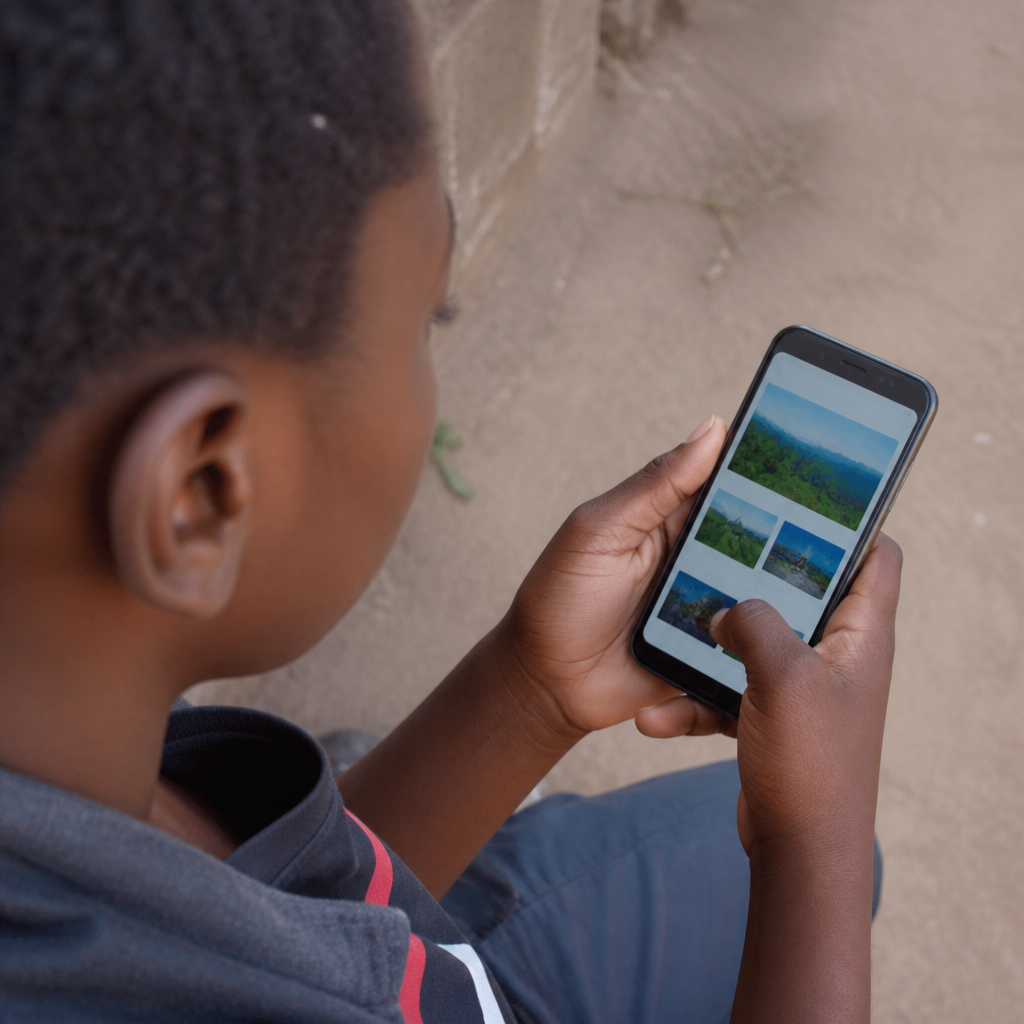
With over 26 million mobile subscriptions in a country of roughly 20 million people, Zambia is one of the most mobile-dominant markets in Africa. Most of your customers will find your website on a smartphone, not a laptop.
A “mobile-responsive” site adjusts its layout for different screen sizes. A “mobile-first” site is designed with the small screen as the primary experience, then adapted upward for larger screens. The difference is significant in practice.
How to test an agency’s mobile work:
- Open their portfolio sites on your own phone, not just on a desktop browser.
- Check whether buttons are large enough to tap without zooming in.
- Check whether text is readable without pinching to enlarge.
- Check whether images load quickly or cause the page to stall.
Ask the agency directly: “What percentage of your clients’ traffic comes from mobile devices?” A good agency tracks this data and will answer confidently. Also ask whether they test on lower-end Android handsets, which represent the bulk of the Zambian market, not just high-end iPhones.
4. SEO Foundations: Getting Found on Google
A beautiful website that no one can find on Google is a missed opportunity. SEO (Search Engine Optimisation) is the practice of building and structuring a website so that it appears in search results when potential customers are looking for what you sell.
Many Zambian web developers build technically functional sites but skip the foundations that make those sites visible in search results. Ask every agency these questions before hiring:
- “Do you set up Google Search Console and Google Analytics on delivery?” [Plain-language test: These are free Google tools. If the agency does not know what they are, they are not doing SEO basics.]
- “How do you handle the robots.txt file and XML sitemap?” A robots.txt file tells search engines which pages to index; an XML sitemap tells them where all your pages are. [Plain-language test: After the site is live, visit yourwebsite.com/robots.txt and yourwebsite.com/sitemap.xml in your browser. Both should exist and be readable.]
- “Do you implement structured data?” Structured data is a layer of code that helps Google understand what your business does – your hours, location, products, and reviews. [Plain-language test: Use Google’s free Rich Results Test to paste in your URL and see if any structured data is present after launch.]
- “Do you write SEO-optimised page titles and meta descriptions?” Every page should have a unique title and description written for humans and search engines.
The best website developers in Zambia treat SEO as part of the build, not an optional add-on. If an agency says “we handle SEO separately after launch,” ask whether that SEO work is included in the quoted price or billed extra.

5. Security: Protecting Your Business and Your Customers
A website without proper security can be hacked, defaced, or used to steal your customers’ personal data. In Zambia, where digital trust is still being established, a security breach can permanently damage your brand’s reputation.
These are the minimum security standards any reputable Zambian web development agency should provide:
- SSL certificate (HTTPS): Every website needs an SSL certificate. This encrypts data between your visitor’s browser and your server. [Plain-language test: After launch, check that your URL starts with “https://” and shows a padlock icon in the browser bar. If it shows “Not Secure,” the SSL is missing or broken.]
- Regular software updates: If your site is built on WordPress, plugins and themes must be updated regularly. Unpatched software is the most common entry point for hackers. Ask: “Who is responsible for software updates after launch, and is that included in your support package?”
- Secure admin credentials: Ask whether they will set up two-factor authentication (2FA) on your website admin login. Default usernames like “admin” with weak passwords are a known vulnerability.
- Malware scanning and backups: Ask: “Do you set up automated daily backups, and where are those backups stored?” A backup stored only on the same server as the site is worthless if that server fails.
- Data protection compliance: If your site collects customer data – names, emails, payment details – ask whether the agency builds in a privacy policy and data handling practices consistent with Zambia’s Data Protection Act.
A credible website design and development agency will discuss security proactively, not only when you ask. If security is an afterthought in their sales conversation, it will likely be an afterthought in their build too.
6. Support, Maintenance, and What Happens After Launch
The website launch is not the end of the relationship – it is the beginning. Bugs appear after launch. Content needs updating. Hosting invoices come due. What support does the agency provide, and at what cost?
Questions to ask about post-launch support:
- “What is your typical response time for urgent issues like the site going down?” A business that relies on its website for sales cannot wait 72 hours for a response.
- “Do you offer a monthly maintenance retainer? What does it include?” Clarify whether maintenance covers software updates, content changes, or only critical bug fixes.
- “What happens if our business relationship ends? Will you hand over all admin credentials and files?” This question is critical – see the contract section below.
- “Do you provide training so our team can update the site ourselves?” A good agency will empower you, not create dependency.
Some Zambian agencies disappear after payment. Others stay engaged for years. Client testimonials and references are the best way to find out which type of agency you are dealing with. Ask references specifically: “What was your experience like after the site launched?”
7. Transparent Pricing: Understanding Web Development Costs in Zambia
Web development costs in Zambia vary widely depending on project complexity. The table below reflects realistic market ranges as of 2025-2026. Treat these as starting benchmarks, not fixed prices – your actual quote will depend on the number of pages, custom functionality, integrations, and the agency’s experience level.
Zambia Web Development Pricing Tiers (2025-2026)
- Brochure Site (5-10 pages, contact form, basic SEO setup): ZMW 5,000 – ZMW 15,000. Suitable for service businesses, consultants, and NGOs that need an online presence. Typically includes homepage, about, services, contact, and blog setup. Mobile-responsive and SSL included.
- E-Commerce Site with Mobile Money Integration (product catalogue, MTN/Airtel payment gateway, order management): ZMW 18,000 – ZMW 40,000. Suitable for retail businesses selling products online. Includes payment gateway integration, product pages, shopping cart, and basic inventory management. Mobile-first design is critical at this tier.
- Custom Web Application (bespoke functionality, API integrations, multi-user dashboards, custom databases): ZMW 45,000 – ZMW 150,000+. Suitable for SaaS businesses, large enterprises, logistics companies, and fintech. Pricing varies significantly based on complexity. Requires a detailed technical specification before any accurate quote can be given.
Always ask for an itemised quote, not a lump sum. A transparent agency will break down costs by design, development, testing, content migration, hosting setup, and training. Watch for agencies that quote very low upfront and then charge for every small change – this is a common practice that inflates the final cost well beyond the initial quote.
Also ask: “What is not included in this quote?” Payment gateway fees, domain registration, ongoing hosting, and SEO work are commonly excluded and should be budgeted for separately.
8. Contract, Ownership, and Protecting Yourself Legally
This is the section most Zambian business owners skip – and it is the one that causes the most pain later. A clear contract protects both parties. If an agency refuses to provide a written contract, walk away.
Your contract should address all of the following before you pay a single kwacha:
Admin credential handover at launch: The contract must state explicitly that on the day of launch, the agency will hand over full administrator access to your website, your hosting account, your domain registrar account, and your Google Analytics/Search Console property. You should never be locked out of your own website.
Source code and IP ownership: The contract must state that you own the final website code, design files, and all content created for the project. Some agencies retain ownership of code and use this as leverage when clients want to switch developers. Insist on a clause that assigns all intellectual property to your business on full payment.
Payment schedule: A fair and standard payment structure for Zambian web projects is:
- 30 percent deposit at project kick-off (covers planning and design work)
- 40 percent at design approval or development milestone (typically when you approve the visual mockups)
- 30 percent at final delivery and handover (paid only after you have tested and accepted the finished site)
Never pay 100 percent upfront. Never pay the final 30 percent before you have tested the site and received all login credentials. This payment structure is standard across reputable digital agencies internationally and is reasonable to request from any Zambian agency.
Scope of work in writing: Every feature you discussed verbally must appear in the contract or a signed project scope document. “We said we wanted a booking system” is not enforceable if it is not in the written scope. Verbal agreements are very difficult to enforce.
What to do if the agency goes dark: If the agency stops responding mid-project, you need recourse. Your contract should include a timeline for deliverables, a process for resolving disputes, and a clause specifying what happens to any work completed if the contract is terminated. Keep copies of every payment receipt, email thread, and deliverable approved. If the agency holds your domain hostage, contact the domain registrar directly with proof of ownership. For .zm domains, the domain is managed through ZICTA-accredited registrars – knowing who your registrar is before a dispute arises is essential.
9. Local Compliance and Registration: Vetting Questions for Zambian Businesses
Beyond technical skills, there are compliance and regulatory factors specific to Zambia that your web development agency should be able to handle or advise on.
ZICTA registration: Ask whether the agency is registered with the Zambia Information and Communications Technology Authority (ZICTA). While not every developer is required to hold a specific ZICTA licence for website development, a reputable agency operating in the Zambian digital sector should be aware of ZICTA regulations and able to advise you on compliance relevant to your business type.
ZRA e-invoicing: The Zambia Revenue Authority (ZRA) has been rolling out Smart Invoice, a system for electronic invoicing and VAT compliance. If your business is VAT-registered, ask whether the developer can integrate ZRA Smart Invoice compatibility into your e-commerce or billing system. An agency that has never heard of Smart Invoice has likely not worked with VAT-registered Zambian businesses before.
.zm domain handling: Zambian businesses often benefit from using a .zm or .co.zm domain for local search visibility and brand trust. Ask the agency: “Do you handle .zm domain registration on our behalf, and will the domain be registered in our business name, not yours?” The domain must be registered in your company’s name. Some agencies register domains in their own accounts and use this as leverage later.
Data Protection Act compliance: If your website collects personal data from Zambian citizens, you need a privacy policy that reflects the obligations under Zambia’s Data Protection Act No. 3 of 2021. Ask whether the agency builds this into the project or whether you need a separate legal advisor.
10. Local Market Knowledge: The Differentiator That Actually Matters
Technical skill is necessary but not sufficient. The best web development companies in Zambia combine technical ability with genuine understanding of how Zambian customers behave online.
An agency with local market knowledge will build for:
- Low-bandwidth environments: Many Zambian users, particularly outside Lusaka, are on slower connections. A locally-aware developer optimises image sizes, uses lazy loading, and avoids heavy JavaScript frameworks that make pages slow on mobile data.
- Mobile money as the default payment method: MTN Mobile Money and Airtel Money are not optional extras in Zambia – they are the primary payment method for a large share of the population. An agency that only offers Visa/Mastercard integration is building for a minority of your potential customers.
- Local language considerations: Depending on your target market, content in Bemba, Nyanja, or Tonga alongside English may significantly improve engagement.
- WhatsApp as a customer service channel: Many Zambian businesses use WhatsApp Business as their primary customer communication tool. An agency that understands this will integrate a WhatsApp chat button rather than a generic live chat widget.
To gauge local knowledge, ask: “What are the three biggest mistakes you see Zambian businesses make with their websites?” A good agency will give you specific, Zambia-specific answers. A generic answer about “not having a mobile-responsive design” or “poor SEO” is not wrong, but it tells you the agency is not thinking deeply about the local context.
You can also explore digital solutions for Zambian e-commerce businesses to understand what a comprehensive digital strategy looks like beyond just the website itself.
The Agency Interview Checklist: 15 Questions to Ask Before Hiring
Use this consolidated list when you sit down with any web development agency in Zambia. Take notes. Compare answers across at least two or three agencies before deciding.
- Can you share three live websites you have built in the last 18 months?
- Can I contact one of your past clients directly for a reference?
- What CMS or technology stack do you recommend for my project, and why?
- How do you ensure the site loads fast on mobile in low-bandwidth areas?
- Do you integrate MTN Mobile Money and Airtel Money for e-commerce?
- What SEO foundations do you include in the build (GSC, Analytics, sitemap, structured data)?
- How do you handle security – SSL, backups, updates, and 2FA?
- What is your payment structure? Do you follow a 30/40/30 schedule?
- Will all admin credentials, domain access, and source code be handed to us at launch?
- Who owns the intellectual property of the completed website?
- Are you familiar with ZRA Smart Invoice integration for VAT-registered businesses?
- Will you register the .zm domain in our business name?
- What does your post-launch support include, and what does it cost?
- What is your response time if the site goes down on a Saturday?
- What is not included in your quote?
Any agency that struggles to answer these questions clearly and confidently is not ready to handle your project.
Key Takeaways
- Zambia’s digital market is growing fast – making the right web development choice now has compounding long-term value for your business.
- Always verify portfolio work via live URLs and direct client references, not screenshots.
- Mobile-first design and mobile money integration are non-negotiable for Zambian e-commerce.
- SEO foundations (Google Search Console, sitemap, structured data) should be built in, not bolted on after launch.
- Security basics – SSL, backups, 2FA, software updates – are minimum standards, not premium add-ons.
- Use a 30/40/30 payment schedule. Never pay 100 percent upfront.
- Insist on written IP ownership and admin credential handover clauses in your contract.
- Ask about ZICTA awareness, ZRA Smart Invoice compatibility, and .zm domain handling as part of your vetting process.
- Budget realistically: brochure sites start from ZMW 5,000, e-commerce with mobile money from ZMW 18,000, and custom applications from ZMW 45,000 upward.
Conclusion
Choosing the best web development company in Zambia does not have to be a gamble. The businesses that get it right are the ones that ask hard questions before signing anything, verify claims with real evidence, and insist on clear contractual protections from the start.
Take this checklist into your next agency meeting. Compare at least two or three proposals before deciding. And remember: the cheapest quote is rarely the best value when you factor in the cost of rebuilding a poorly built site six months later.
If you are ready to start a conversation with a team that understands Zambia’s digital market, explore our web development services or get in touch with our team to discuss your project requirements. We are happy to answer every question on this checklist – because a confident client makes for a better project outcome for everyone.
FAQ
How much does it cost to build a website in Zambia?
Website costs in Zambia vary by complexity. A brochure site (5-10 pages) typically ranges from ZMW 5,000 to ZMW 15,000. An e-commerce site with mobile money integration runs ZMW 18,000 to ZMW 40,000. Custom web applications start from ZMW 45,000 and can exceed ZMW 150,000 depending on functionality. Always request an itemised quote and ask what is not included.
What should I look for when hiring a web developer in Lusaka?
Look for a developer who can show live portfolio URLs (not just screenshots), provide verifiable client references, demonstrate mobile-first design skills, integrate MTN and Airtel mobile money for e-commerce, and include SEO foundations like Google Search Console setup and XML sitemaps. Always verify they will hand over all admin credentials and source code ownership at project completion.
Should a Zambian business website include mobile money payment options?
Yes, absolutely. With over 26 million mobile subscriptions in Zambia and mobile money being the primary payment method for a large share of the population, any e-commerce website that lacks MTN Mobile Money and Airtel Money integration is excluding a significant portion of potential customers. Ask specifically which mobile money gateways the agency has previously integrated.
What is a fair payment structure when hiring a web development agency in Zambia?
A standard and fair payment structure is 30 percent deposit at project kick-off, 40 percent at design approval or a key development milestone, and the remaining 30 percent only on final delivery after you have tested and accepted the site. Never pay 100 percent upfront, and never pay the final instalment before receiving all admin credentials and verifying the site works as agreed.
How do I verify a web developer's technical claims before hiring them?
Run their own website through Google's free PageSpeed Insights tool – a score below 70 on mobile is a warning sign. Visit their portfolio sites on your own smartphone to test real-world performance. Use the Rich Results Test from Google to check whether their sites have structured data. Ask for live URLs and contact at least one past client directly before committing.
What local compliance issues should a Zambian business ask their web developer about?
Ask whether the agency is familiar with ZICTA registration requirements, ZRA Smart Invoice integration for VAT-registered businesses, and .zm domain registration procedures. Confirm the domain will be registered in your business name, not the agency's. Also ask whether they can include a privacy policy aligned with Zambia's Data Protection Act No. 3 of 2021 if your site collects customer data.
What should a web development contract in Zambia include?
Your contract must include: full intellectual property ownership assigned to your business on final payment, admin credential and source code handover at launch, a clear payment schedule (ideally 30/40/30), a written scope of work listing every agreed feature, a timeline with milestones, and a dispute resolution clause. Any feature discussed verbally but not in the written contract should be considered out of scope.